


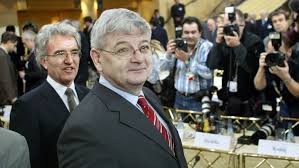
Joschka Fischer, a name that echoes through the halls of modern German history, stands as a symbol of transformation and resilience. Born in a time of post-war reconstruction, he rose from humble beginnings to become one of Germany’s most influential figures. His journey, filled with twists and turns, showcases how one person’s passion can shape a nation’s path toward a brighter future. As we dive into his story, it’s clear that Joschka Fischer’s life isn’t just about politics—it’s about evolving ideas, bridging divides, and inspiring change in ways that continue to resonate today.
Early Life and Roots of Joschka Fischer
Picture a small town in post-World War II Germany, where the air still carried whispers of the past. That’s where Joschka Fischer entered the world on April 12, 1948, in Gerabronn, Württemberg-Baden. His full name, Joseph Martin Fischer, hints at a blend of cultures—his family had Hungarian roots, having been displaced from Budakeszi in Hungary after the war. His father worked as a butcher, instilling in young Joschka a sense of hard work and family values, even if life wasn’t always easy.
Growing up in a Catholic household, Joschka Fischer experienced the challenges of a changing Germany. He dropped out of high school to pursue an apprenticeship as a photographer, a decision that reflected his independent spirit. But hey, life’s not always a straight path, right? In 1967, at just 19, he married his first wife, Edeltraud Seifert, in Scotland—a romantic escape that marked the beginning of his personal adventures. Though the marriage ended in 1984, it was part of a life full of relationships; Joschka Fischer would go on to marry five times, finding lasting companionship with Minu Barati in 2005. They share a blended family, with his two children from a previous marriage and her daughter, creating a warm home base amid his bustling career.
These early years shaped Joschka Fischer’s worldview. Moving to Frankfurt in 1968, he immersed himself in the vibrant student scene, where ideas flowed like rivers. It was here that his political awakening began, fueled by the turbulent events of the era. The shooting of a student during a protest in West Berlin galvanized him, turning a young man into an activist ready to challenge the status quo. Looking back, it’s amazing how these roots planted the seeds for a career that would bloom into something extraordinary.

Joschka Fischer’s Radical Beginnings
Ah, the 1960s and 1970s—times of revolution, when young people everywhere were questioning authority. Joschka Fischer dove headfirst into this whirlwind, joining the militant group Revolutionary Fight in Frankfurt. He wasn’t just a bystander; he participated in riots and demonstrations, working odd jobs like taxi driving to make ends meet. It’s easy to see why—he saw injustice and wanted to fight it, much like many of his generation.
During this period, Joschka Fischer’s activism took him to unexpected places. In 1969, he attended a PLO convention in Algiers, a move that later sparked debates about his views. But let’s not jump to conclusions; this was a time of exploration, and Joschka Fischer was searching for answers. A turning point came in 1976 with the Entebbe hijacking, where terrorists separated Jewish and non-Jewish passengers. This event shook him to his core, forcing a reevaluation of his anti-Zionist stance and the violence around him. It was like a wake-up call, steering him away from extremism toward more constructive paths.
By the late 1970s, after witnessing the bloody aftermath of leftist violence, Joschka Fischer distanced himself from militants. He began to see that real change might come through dialogue, not destruction. This shift wasn’t overnight—dangling modifiers in his life story, like unresolved questions from his past, lingered—but it set the stage for his entry into formal politics. Optimistically, it’s a reminder that people can grow, learn from mistakes, and emerge stronger.
The Green Awakening: Joschka Fischer Joins the Party
Transitioning from street protests to parliamentary seats? That’s Joschka Fischer for you. In 1982, he joined the newly formed Green Party, a group advocating for environmental protection, peace, and social justice. At the time, the Greens were seen as outsiders, pushing radical ideas like shutting down nuclear plants and withdrawing from NATO. But Joschka Fischer, with his charisma and sharp wit, quickly became a key player.
His first big break came in 1983 when he was elected to the Bundestag, Germany’s lower house of parliament. There, he wasn’t afraid to heckle opponents with clever remarks, earning a reputation as a gadfly. Yet, beneath the humor was a serious commitment to change. In 1985, Joschka Fischer made history as the first Green to hold a cabinet position, becoming Minister for the Environment and Energy in Hesse. Swearing in while wearing sneakers? That caused a stir, but it symbolized his fresh approach—breaking traditions to bring new energy.
Under his leadership, the Greens in Hesse tackled pollution and promoted renewable energy, laying groundwork for Germany’s future green policies. Joschka Fischer’s optimism shone through; he believed that environmentalism could unite people, turning potential crises into opportunities for innovation. It’s no wonder he helped steer the party toward more pragmatic, “Realo” positions, focusing on achievable goals rather than utopian dreams.
Joschka Fischer’s Rise in State Politics
Building on his success, Joschka Fischer served as Deputy Minister-President of Hesse from 1991 to 1994, overseeing environment, energy, and federal affairs. This role honed his skills in coalition-building, as the Greens partnered with the Social Democrats (SPD). He navigated complex issues like waste management and conservation, always with an eye toward sustainable progress.
One standout achievement was pushing for stricter environmental regulations, which helped clean up rivers and reduce emissions. Joschka Fischer’s approach was collaborative; he knew that to make lasting change, you had to work with others, even if it meant compromise. Critics sometimes called him a chameleon for adapting, but isn’t flexibility a strength? In politics, as in life, bending without breaking often leads to greater heights.
By 1994, Joschka Fischer entered federal politics as co-chairman of the Green’s parliamentary group. His popularity soared, with polls showing him as a favorite among Germans. This period marked his transformation from radical to respected leader, proving that perseverance pays off.
National Spotlight: Joschka Fischer Becomes Vice Chancellor
The 1998 elections were a game-changer. The Greens, under Joschka Fischer’s influence, formed a coalition with the SPD led by Gerhard Schröder. Suddenly, Joschka Fischer was Foreign Minister and Vice Chancellor—a leap that surprised many but felt inevitable to those who knew his drive.
In this role, he balanced the Greens’ ideals with national responsibilities. He supported NATO’s intervention in Kosovo in 1999, arguing it was necessary to prevent genocide. This decision was controversial within his party, but Joschka Fischer stood firm, emphasizing humanitarian values. Similarly, after 9/11, he backed Germany’s involvement in Afghanistan, showing a commitment to global stability.
His tenure brought optimism to German foreign policy. Joschka Fischer advocated for EU enlargement, fostering unity across Europe. He also opposed the Iraq War in 2003, famously clashing with U.S. leaders but maintaining transatlantic ties through diplomacy. It’s like he was the bridge-builder, turning potential rifts into stronger alliances.

Key Achievements of Joschka Fischer in Foreign Affairs
Joschka Fischer’s time as Foreign Minister was packed with milestones that highlighted his expertise. Let’s break some down:
- Kosovo Intervention: By supporting NATO’s actions, he helped end ethnic cleansing, saving countless lives and stabilizing the Balkans.
- EU Presidency: As President of the EU Council in 1999, he advanced integration, paving the way for the euro and eastern expansion.
- Afghanistan Mission: Committing German troops to peacekeeping showed Germany’s readiness to contribute to international security.
- Opposition to Iraq War: His principled stand prevented deeper divisions, earning respect worldwide for moral leadership.
- Environmental Diplomacy: He pushed for global climate agreements, linking foreign policy with sustainability.
These accomplishments weren’t just wins; they demonstrated Joschka Fischer’s authority in navigating complex geopolitics. His optimistic tone in speeches, like the famous Humboldt University address on Europe’s future, inspired hope for a united continent.
To illustrate his impact, here’s a table of key positions held by Joschka Fischer:
| Position | Years | Key Focus Areas |
|---|---|---|
| Minister for Environment and Energy, Hesse | 1985-1987 | Pollution control, renewable energy |
| Deputy Minister-President, Hesse | 1991-1994 | Environmental policies, federal affairs |
| Co-Chairman, Green Parliamentary Group | 1994-1998 | Party strategy, opposition leadership |
| Foreign Minister and Vice Chancellor | 1998-2005 | International relations, EU integration |
| Post-Politics Roles | 2005-Present | Consulting, writing on global issues |
This table shows his steady climb, each step building trust and expertise.
Controversies Surrounding Joschka Fischer
No one’s path is without bumps, and Joschka Fischer faced his share. In 2001, old photos surfaced showing him in street fights from the 1970s, sparking a media storm. Critics questioned his past violence, but Joschka Fischer addressed it head-on, testifying in court and emphasizing growth. “I’ve learned from my mistakes,” he said, turning controversy into a lesson on redemption.
Another hot topic was the visa scandal in 2005, where lax policies allegedly aided crime. Though cleared, it tested his resilience. Then there was the Green Party’s internal debates over military involvement—pacifists clashed with his pragmatic views. Yet, through it all, Joschka Fischer’s popularity held, as polls often named him Germany’s favorite politician.
Optimistically, these challenges polished his character, proving that facing adversity head-on builds stronger leaders. It’s a colloquialism, but what doesn’t kill you makes you stronger, and Joschka Fischer emerged more trusted than ever.
Joschka Fischer’s Life Beyond Politics
After the 2005 elections, when the Greens lost power, Joschka Fischer stepped back from active politics. But retirement? Not for him. He became a senior fellow at Princeton’s Woodrow Wilson School, sharing insights on international affairs. He also founded a consulting firm, advising on energy and politics, leveraging his experience for global good.
Joschka Fischer turned author too, penning books like “Mein Langer Lauf zu mir Selbst,” detailing his personal fitness journey—from overweight to marathon runner. It’s inspiring how he transformed his health, losing over 100 pounds through running and diet. Today, at 77, he writes columns for Project Syndicate, offering optimistic takes on world events, like Europe’s resilience amid crises.
His marriage to Minu Barati and family life provide balance. Joschka Fischer enjoys wines and food, but in moderation now. His post-political phase shows that life after office can be fulfilling, full of new adventures and contributions.
The Enduring Legacy of Joschka Fischer
Reflecting on Joschka Fischer’s impact, it’s clear he’s left an indelible mark. He modernized the Green Party, making environmentalism mainstream in Germany. His foreign policy helped Germany reclaim a positive global role post-Cold War. Awards like the Medal for Extraordinary Merits for Bavaria in a United Europe in 2016 affirm his authority.
Joschka Fischer’s story is one of optimism— from radical to reformer, he showed that change is possible. His expertise in bridging ideologies inspires future leaders. As Germany faces new challenges like climate change, his legacy reminds us that with vision and grit, progress is within reach.
In the end, Joschka Fischer isn’t just a politician; he’s a beacon of hope, proving that one person’s evolution can uplift an entire nation.
Fazit
Wrapping it all up, Joschka Fischer’s life exemplifies the power of reinvention and positive action. From his early activist days to steering Germany’s foreign policy, he’s embodied optimism, turning obstacles into stepping stones. His contributions to environmentalism, European unity, and global peace continue to inspire. As we look ahead, Joschka Fischer’s journey encourages us to embrace change with open arms, fostering a brighter tomorrow for all.
FAQs
What inspired Joschka Fischer to enter politics? Joschka Fischer was motivated by the social upheavals of the 1960s, particularly protests against authority and injustice, which led him from activism to the Green Party.
How did Joschka Fischer change the Green Party? He shifted it from radical fringes to a governing force, emphasizing pragmatic environmental and foreign policies, helping it join coalitions and influence national agendas.
What was Joschka Fischer’s stance on the Iraq War? He strongly opposed it, arguing it lacked international legitimacy, which highlighted his commitment to multilateralism and earned him global respect.
Has Joschka Fischer written any books? Yes, including memoirs like “Mein Langer Lauf zu mir Selbst,” where he shares his personal transformation, and political analyses on Europe’s future.
What is Joschka Fischer doing today? He consults on international affairs, writes columns, and enjoys family life, continuing to contribute insights on global challenges with an optimistic outlook.
