


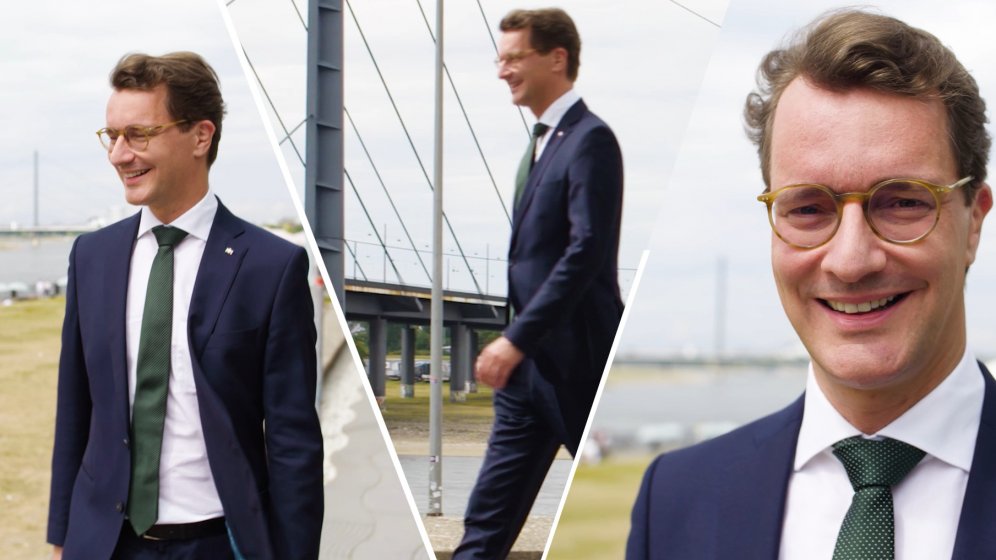
Hendrik Wüst stands as a prominent figure in German politics, embodying the spirit of progress and resilience in one of Europe’s most influential states. As the Minister-President of North Rhine-Westphalia, he’s not just steering the ship through turbulent times but also inspiring a generation with his forward-thinking approach. Indeed, Hendrik Wüst’s journey from a small town in West Germany to the helm of the country’s most populous state is a testament to dedication and strategic vision. This article delves deep into his life, career, and contributions, highlighting why he’s become a beacon of optimism in contemporary politics.
Early Life and Roots of Hendrik Wüst
Born on July 19, 1975, in the quaint town of Rhede, North Rhine-Westphalia, Hendrik Wüst grew up in an environment that fostered community values and hard work. Rhede, a place known for its close-knit society and industrial heritage, played a pivotal role in shaping his worldview. From a young age, he was immersed in local affairs, which sparked his interest in public service. His family life, though private, reflects stability; he’s married to Katharina Wüst since September 2019, and they share the joy of raising a daughter. This personal foundation, coupled with his towering presence at 1.91 meters, gives him an approachable yet commanding demeanor.
Growing up in post-Cold War Germany, Hendrik Wüst witnessed the unification’s challenges and opportunities firsthand. It’s no wonder he developed a keen sense of unity and progress. His early experiences, like co-founding the local branch of the Junge Union (the youth wing of the CDU) at just 15 years old, show a precocious commitment to civic engagement. These formative years laid the groundwork for a career that’s all about bridging gaps and building brighter futures.
Educational Journey of Hendrik Wüst
Hendrik Wüst’s academic path is marked by diligence and a focus on law, which has equipped him with the tools to navigate complex political landscapes. After completing his Abitur in 1995, he pursued law studies at the University of Münster, a prestigious institution renowned for its rigorous programs. By 2000, he had passed his first state law examination, followed by a legal clerkship in Münster, Coesfeld, and even Brussels, broadening his horizons with European perspectives.
In 2003, Hendrik Wüst aced his second state law examination and was admitted to the bar, solidifying his expertise as a lawyer. This legal background isn’t just a credential; it’s the backbone of his decision-making process, ensuring policies are grounded in fairness and legality. Moreover, his time in Brussels exposed him to international affairs, which later influenced his stances on EU cooperation and global challenges. Education, for Hendrik Wüst, has always been a stepping stone to greater service, and he often emphasizes its importance in empowering the next generation.
Hendrik Wüst’s Entry into Politics
Hendrik Wüst’s political odyssey began remarkably early, showcasing his innate leadership qualities. Joining the Christian Democratic Union (CDU) in 1990, he quickly rose through the ranks. By 1994, at the tender age of 19, he was elected to the Rhede city council, where he served until 2009. This local involvement honed his skills in grassroots governance, teaching him the value of listening to constituents’ concerns.
From 2000 to 2006, he chaired the Junge Union in North Rhine-Westphalia, a role that positioned him as a voice for young conservatives. During this period, he became part of the CDU leadership under Jürgen Rüttgers, demonstrating his ability to collaborate and innovate. Hendrik Wüst’s early political steps were like planting seeds that would grow into a robust career tree, full of branches extending into state and national influence. His optimism shone through even then, as he advocated for policies that promised a prosperous future for all.
Rise Within the CDU for Hendrik Wüst
Ascending the CDU ladder, Hendrik Wüst’s trajectory was nothing short of meteoric. Serving as General Secretary of the CDU in North Rhine-Westphalia from 2006 to 2010, he played a key role in organizational strategies. Though he resigned amid a scandal involving preferential access for payments—a bump in the road that he navigated with accountability—it didn’t derail his ambitions.
Between 2010 and 2017, Hendrik Wüst shifted gears, working for the German Newspaper Publishers Association (BDZV) and a private broadcaster in North Rhine-Westphalia. This stint in the private sector enriched his understanding of media and business dynamics, making him a more well-rounded politician. By 2013, he was chairing the SME Union of the CDU in North Rhine-Westphalia until 2022, championing small businesses as the engine of economic growth. His rise exemplifies how perseverance and expertise can turn challenges into opportunities, inspiring many in the party and beyond.
Hendrik Wüst as Minister of Transport
Taking the reins as Minister of Transport in Armin Laschet’s cabinet from 2017 to 2021, Hendrik Wüst tackled one of Germany’s most critical sectors with vigor. His tenure focused on sustainable mobility, infrastructure upgrades, and digital integration. For instance, he pushed for expanded public transport networks, recognizing that efficient systems are key to reducing carbon footprints and enhancing quality of life.
Under his watch, initiatives like modernizing rail lines and promoting electric vehicles gained momentum. Hendrik Wüst’s approach was optimistic, viewing transportation not as a problem but as a pathway to innovation. He participated in coalition negotiations post-2017 elections, leading discussions on economic affairs and energy, which underscored his multifaceted expertise. This period solidified his reputation as a doer, someone who gets things done while keeping an eye on the horizon.
Becoming Minister-President: Hendrik Wüst’s Milestone
In a pivotal moment, Hendrik Wüst succeeded Armin Laschet as Minister-President of North Rhine-Westphalia on October 27, 2021. Endorsed by Laschet himself, he was elected with overwhelming support, receiving 103 votes in the state parliament—more than the coalition’s seats. This transition marked a new era, with Hendrik Wüst also becoming the CDU state chairman on October 23, 2021, with 98% backing.
Re-elected on June 28, 2022, following the state elections where the CDU secured its highest vote share, his leadership has been characterized by stability and forward momentum. As Minister-President, he’s represented North Rhine-Westphalia in the Bundesrat, serving on committees for foreign affairs and defense. Hendrik Wüst’s ascent is a story of trust earned through consistent performance, promising a bright chapter for the state.
Policies and Achievements Led by Hendrik Wüst
Hendrik Wüst’s policies reflect a blend of conservatism and innovation, aiming for a climate-neutral industrial state. He’s championed reconciling climate action with industry, ensuring quality jobs remain intact. Key achievements include:
- Leading the push for green steel production in Duisburg, with significant state support, setting a model for decarbonization.
- Advancing digital transformation through platforms like KI.NRW and EIN Quantum NRW, fostering AI and quantum research.
- Implementing bureaucracy-reduction packages to speed up approvals, countering federal delays.
- Promoting sustainable transport and education equity, providing opportunities for all.
In foreign affairs, his meetings with leaders like Mark Rutte and Emir Tamim bin Hamad Al Thani have strengthened international ties. Hendrik Wüst’s optimistic tone in policies emphasizes growth and climate action as compatible goals, driving prosperity.
Moreover, his views on research, as shared in interviews, highlight the need for reliable funding and partnerships. He sees cutting-edge research as the driver for overcoming challenges like energy transitions and medical advancements.
Here’s a table outlining key milestones in Hendrik Wüst’s career:
| Year | Milestone | Description |
|---|---|---|
| 1990 | Joins CDU | Begins political involvement at age 15. |
| 1994 | Elected to Rhede City Council | Starts local governance role. |
| 2000-2006 | Chairs Junge Union NRW | Leads youth wing, gains prominence. |
| 2005 | Elected to Landtag | Represents Borken I district. |
| 2006-2010 | CDU General Secretary NRW | Manages party operations. |
| 2017-2021 | Minister of Transport | Oversees infrastructure and mobility. |
| 2021 | Becomes Minister-President | Succeeds Armin Laschet. |
| 2022 | Re-elected | Leads CDU to strong election performance. |
| 2024 | Supports Friedrich Merz | Decides not to run for chancellor. |
This table illustrates his steady progression, each step building on the last.
Personal Life and Values of Hendrik Wüst
Beyond the political arena, Hendrik Wüst leads a balanced life rooted in family and community. Married to Katharina since 2019, with a daughter, he often draws inspiration from parenthood, focusing on building a better world for future generations. Residing in Rhede, he maintains ties to his roots, which keep him grounded.
His values lean conservative, as seen in the 2007 white paper “Moderner bürgerlicher Konservatismus” co-authored with Markus Söder. Yet, he’s adaptable, embracing modern challenges like digitalization. Hendrik Wüst’s personal ethos—listening, respecting, and deciding together—translates into his governance style, fostering trust and optimism.

Hendrik Wüst’s Impact on North Rhine-Westphalia
Under Hendrik Wüst’s stewardship, North Rhine-Westphalia is transforming into Europe’s first climate-neutral industrial region. His initiatives in hydrogen frameworks, tax incentives, and R&D support are paving the way for sustainable growth. By addressing skilled labor shortages and energy costs, he’s ensuring the state remains an economic powerhouse.
Furthermore, his fight against populism, like countering AfD’s narratives, protects democratic values. Hendrik Wüst’s impact is profound, turning potential pitfalls into platforms for progress, and his optimistic vision inspires confidence in the state’s future.
Future Prospects for Hendrik Wüst
Looking ahead, Hendrik Wüst’s future brims with possibilities. Though he opted not to run for chancellor in 2025, supporting Friedrich Merz instead, his influence within the CDU remains strong. As a potential key player in national politics, he’s poised to contribute to Germany’s broader agenda.
His focus on innovation, from battery research to AI integration, positions him as a forward-thinker. Indeed, Hendrik Wüst’s trajectory suggests more achievements on the horizon, continuing to uplift North Rhine-Westphalia and beyond with his unwavering optimism.
Fazit
In summary, Hendrik Wüst exemplifies leadership that’s both grounded and aspirational. From his early days in Rhede to leading North Rhine-Westphalia, he’s navigated challenges with grace and vision. His policies, blending tradition with innovation, promise a thriving future. As we reflect on his journey, it’s clear that Hendrik Wüst isn’t just a politician; he’s a catalyst for positive change, inspiring us all to embrace tomorrow with hope.
FAQs
What is Hendrik Wüst’s current position?
Hendrik Wüst serves as the Minister-President of North Rhine-Westphalia, a role he’s held since October 2021, and he’s also the chairman of the CDU in the state.
When was Hendrik Wüst born?
Hendrik Wüst was born on July 19, 1975, in Rhede, North Rhine-Westphalia, Germany.
What are some key policies of Hendrik Wüst?
Hendrik Wüst focuses on climate-neutral industry, digital transformation, sustainable transport, and education equity, aiming to balance environmental goals with economic prosperity.
Is Hendrik Wüst married?
Yes, Hendrik Wüst is married to Katharina Wüst since September 2019, and they have one daughter.
What is Hendrik Wüst’s educational background?
Hendrik Wüst studied law at the University of Münster, passing his state examinations in 2000 and 2003, and was admitted to the bar as a qualified lawyer.
